By Godwin Owusu Frimpong
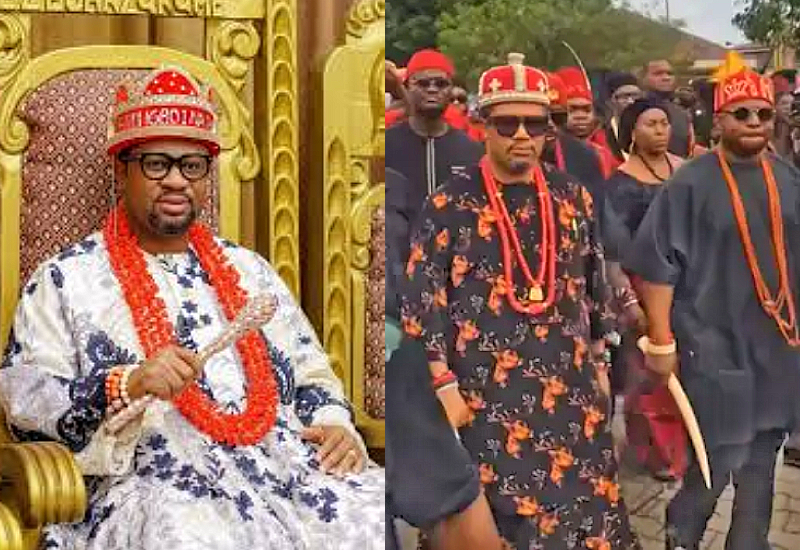
Self-styled ‘King’ Chukwudi Jude Ihenetu, ostensibly ruling over a diaspora in Ghana, has once again courted controversy – and public humiliation – with a brazen, uninvited appearance at the Manhyia Palace. On September 17, 2025, amidst the solemn final funeral rites of Nana Ama Konadu Yiadom III, the man who claims dominion over Igbos, despite widespread opposition from almost half his supposed subjects, attempted to greet the Asantehene, Otumfuo Osei Tutu II. But what precisely was the logic behind this audacious, unbidden pilgrimage to the very heart of Asante power, knowing full well he lacked a formal invitation? What motive truly propelled this defiant act?
The spectacle unfolded as the alleged monarch, whose previous attempts to assert authority had already earned him the wrath of the Ga Traditional Council, found his audacious entry to the funeral denied. Swiftly intercepted by an Otumfuo linguist, Chukwudi Jude Ihenetu, despite years of self-proclamation and persistent schemes to be ‘gazetted,’ was flatly rejected as an “unrecognized, unofficial King.” This latest, very public shaming has ignited a firestorm across social media, with many demanding authorities intervene to curb what they term his “uncouth behavior” – a nonconformist lifestyle seen as increasingly alien to Ghana’s deeply rooted traditional systems.
The incident throws into sharp relief the increasingly perplexing phenomenon of ‘HRH’ Chukwudi Jude Ihenetu. His “coronation” – or more accurately, self-styled ascension – continues to polarize, not least within the very Igbo diaspora he purports to lead, where nearly half vehemently reject his authority. While some dismiss him as merely an ebullient businessman seeking attention, others are visibly enraged, with growing calls for his arrest for persistent perceived disrespect of Ghana’s traditional structures. Yet, paradoxically, a segment of the diaspora champions his kingship as a vital symbol of identity and cultural pride, creating a profound schism that deepens with every controversial maneuver. The question remains: In the face of such internal division and external rejection, why gamble on such a public, uninvited display at Manhyia? What did he hope to achieve?
Godwin Owusu Frimpong