By Godwin Owusu Frimpong
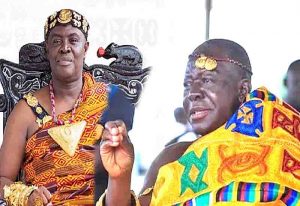
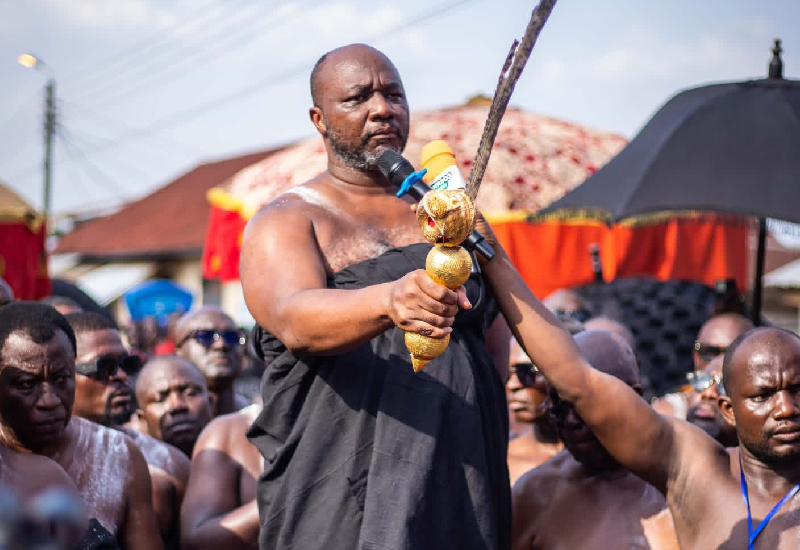
A golden dawn broke over the historic town of Asante Mampong on Sunday, 5 January 2026, as thousands gathered in silent reverence to witness the swearing-in of Nana Osei Bonsu III, the newly enstooled Omanhene of the Asante Mampong Traditional Area. Clad in rich kente of crimson and gold, he stood before the sacred Amaniampong Silver Stool, his voice firm as he swore the oath of allegiance—promising wisdom, unity, and unwavering dedication to his people.
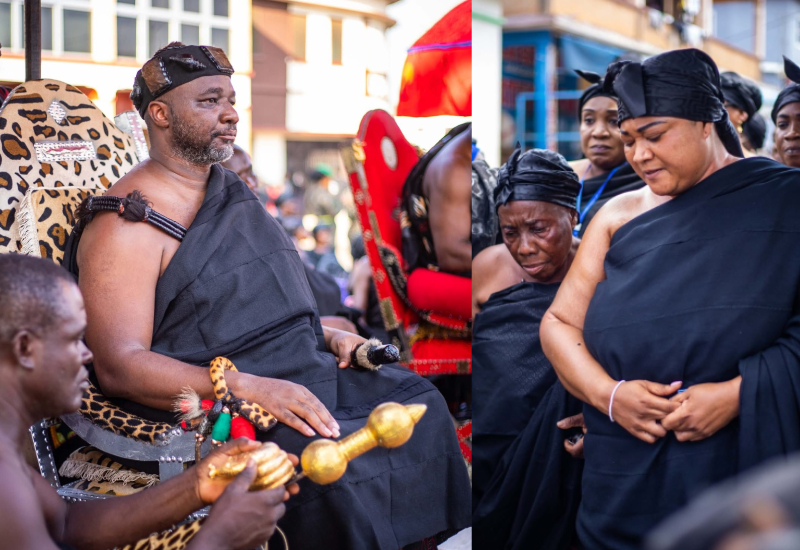
The ceremony, steeped in centuries-old Asante tradition, unfolded beneath the sprawling safou trees of the Mampong Palace, where ancestral drums echoed like the heartbeat of a nation. In solemn procession, Nananom Abiretufuo—spiritual and royal elders including Mamponghemaa Nana Agyakoma Difie II, Adankranyamanhene, Domeabrahene, Agonahemaa, and Ejisuhemaa Nana Yaa Asantewaa—flanked the new chief, their presence a testament to continuity and collective governance.
Representatives from across the Ashanti Region joined the celebration, among them Ashanti Regional Minister Dr. Frank Amoakohene, whose presence underscored the enduring partnership between traditional and state institutions. “This is not just a change of stool, but a renewal of covenant,” he declared during a brief address. “A leader forged in modern excellence, called back to ancestral duty.”
Nana Osei Bonsu III—formerly Leslie Osei Bonsu—brings to the sacred role a rare blend of tradition and innovation. A senior software architect and geospatial systems strategist by profession, his life between Silicon Valley and Accra mirrored the duality of modern Ghana: deeply rooted, yet boldly forward-looking. His nomination followed a resolution by the Asantehene, Otumfuo Osei Tutu II, on 15 December 2025, after mediation of a succession dispute within the traditional council.
The path to enstoolment was no mere formality. On 18 December 2025, the Kingmakers formally introduced the nominee to Otumfuo at Manhyia Palace, performing the customary ntɔm libation and offering schnapps to the Golden Stool. Yet, as the Asantehene emphasized, “Enstoolment is not power—it is responsibility. He will swear allegiance to you, and you to him.” His Majesty also reminded all present: true authority would only be conferred upon the final swearing of allegiance to the Asantehene himself—a rite still pending.
Not without challenge, the process faced a formal objection from Botaasehene, who claimed exclusion from deliberations. Otumfuo acknowledged the petition, ensured due process, and declared the matter resolved—reinforcing the Golden Stool’s role as final arbiter of peace.
One notable absence drew the King’s attention: Akwamuhene, abroad for medical care. “Inform him he must be present for the oath,” Otumfuo instructed. “Else, he abdicates.” A reminder that tradition brooks no vacancy in duty.
As dusk fell and the fontomfrom drums faded, Nana Osei Bonsu III stood tall—not as a ruler, but as a servant. His first words to his people: “I return not to take, but to give. Not to reign, but to rebuild.”
The world watches as a new chapter begins—not only for Asante Mampong, but for a Ghana where the past guides the future, and leaders rise not by ambition, but by calling.
Godwin Owusu Frimpong