
By Godwin Owusu Frimpong
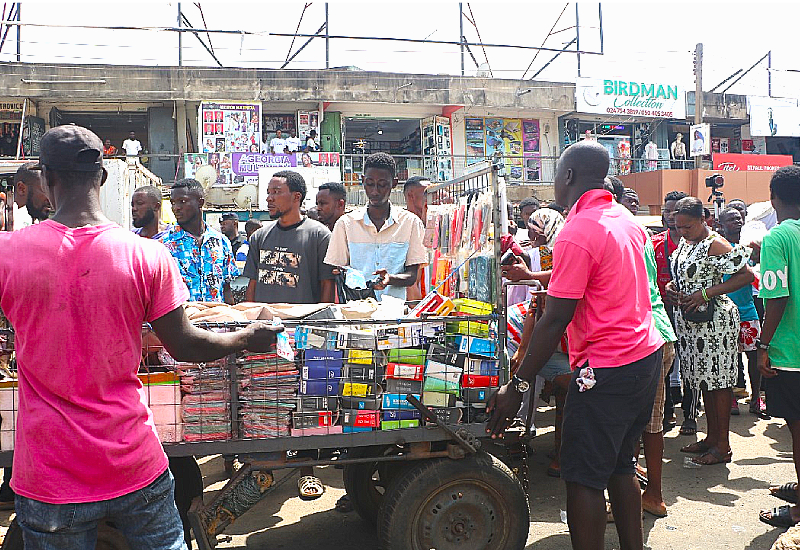
Ashantibiz News has uncovered a damning challenge facing local retailers. Markets that once thrived with Ghanaian enterprise are now heavily dominated by foreign players, particularly in sectors like mobile phones, vehicle spare parts, and second-hand clothing.
Despite existing laws designed to reserve local retail for citizens, enforcement appears significantly lax. There are widespread allegations that duty bearers, whose mandate is to uphold these regulations, are compromising their responsibilities by allegedly engaging with those flouting the rules.
While the nation has ratified various international agreements, it has been underscored that these conventions cannot supersede national laws, particularly those protecting local commerce. Recent tensions, including instances where local traders have acted against foreign-owned shops allegedly operating in violation of the law, highlight the escalating frustration.
Recent incidents, like the disputes in Kumasi where local traders took action against foreign-operated shops, underscore the growing frustration. While regional agreements facilitate the movement of goods and services, authorities maintain that national laws governing retail apply upon entry, a principle upheld in other sub-regional economies. Concerns have also been raised about the sale of substandard goods by some foreign traders who sometimes operate outside their registered business scope.
The Ghana Union of Traders’ Association (GUTA) has reiterated its demand for authorities to courageously confront and address the issue of foreign entities operating in the retail domain. They highlight how large foreign-owned retail outlets are negatively impacting local manufacturers and traders by saturating the market with inexpensive, often subsidized, imported products. This influx, they argue, significantly shrinks the market share for local businesses and contributes to economic instability as earnings are largely repatriated.
Despite long-standing regulations designed to protect Ghanaian retail interests, consistent enforcement has remained a challenge. The ongoing situation prompts critical questions about accountability and the future of local entrepreneurship within the nation’s economy.
Godwin Owusu Frimpong